Common Afflictions
Ear infections are broadly divided into two categories.
The “summer” one, which is external otitis, and the “winter” one, which is middle ear otitis. In this article we will refer to the most common summer ear infection, the external one.
How is it treated?
Almost always, cleaning of the area by the ENT, the use of painkillers and antibiotic drops or ointment, and avoiding contact with water are enough to overcome the problem. However, there is a chance that it extends to the middle ear, fever appears, and antibiotics will be required.
Ear infections affect children most often!
In infancy, the immune system is very vulnerable to infections. Also, children have a very small eustachian tube, which makes them more vulnerable to viruses and bacteria. Finally, large adenoids and tonsils, which are located very close to the eustachian tube, favor middle ear infection.
Adults with a deviated septum or nasal polyps, diabetes, smoking habits, allergies, or respiratory infections are also prone.
Do not use drops for ear infections unless advised by an ENT. If you have an ear infection with a ruptured eardrum and put in drops, they may pass into the middle ear and cause more serious problems, even hearing loss!
Say no to home remedies and do not put oil in your ears when they hurt.
Generally, you should not use cotton swabs! The cotton swab causes so many problems it should be called “the ENT’s best friend”!
Do not let water into your ears and do not swim before an ENT sees you, as you may worsen the condition.
The truth is that doctors answer somewhat firmly: “There is no cold, the child has caught a virus,” often seeing doubt in the parent’s eyes.
So, what is the case?
First of all, in every child or adult showing cold symptoms, it has been clear in the scientific community for decades that this is due to an infection, namely a virus or bacterium, usually a viral one. On the other hand, one cannot ignore the problems cold causes in the body, as it is known to suppress some processes for self-preservation. For example, cold through peripheral vasoconstriction reduces the local defense of the body (e.g., in the nasal mucosa).
When it is cold, droplets from coughing and sneezing remain longer in the air, which favors the transmission of infections. In addition, many viruses prefer cold conditions in winter to grow and spread, and because of the cold, people crowd indoors, making the spread of viruses easier. Finally, it has been proven that those suffering from viral infections who protect themselves from cold and fatigue recover one to two days earlier than those who do not.
So, the truth may be somewhere in between for simple colds! However, in our country, parents’ excessive fear of cold, which goes as far as overdressing, often leads to the other extreme. Children overdressed sweat, and wet clothes cause sudden changes in body temperature, with consequences equal to or worse than the cold itself.
No to overdressing, yes to appropriate clothing
Sudden temperature changes and sweating are more dangerous than the cold itself
Gradual acclimatization to cold combined with exercise is beneficial for the immune system
Vertigo is a feeling of spinning and intense movement of objects around us. In the most severe cases, it can cause nausea and even vomiting. 80% of cases are due to inner ear disease, while 20% are due to neurological disorders.
Intense spinning when turning the head abruptly, changing sides in bed, or getting up from a chair
Severe nausea and vomiting
Tendency to faint and loss of balance
Drowsiness and a “heavy” head
The good thing is that it lasts very little — from hours to 7 days. Symptoms then subside and disappear.
The inner ear sends signals to the brain so we can perceive head and body movement. When salts accumulate and block the signal, balance is disrupted and the brain becomes disorganized, causing dizziness.
Meniere’s syndrome – vertigo episodes, hearing loss, unsteadiness, vomiting
BPPV – common, observed when getting out of bed or sudden head movements
Inner ear inflammation – labyrinthitis, with vertigo, nausea, vomiting
Vestibular migraine – dizziness with migraine
Acoustic neuroma – nerve tumor with dizziness, tinnitus, hearing loss
Other causes – neurological disorders with other symptoms
Ear cleaning and tympanogram
Bedside exercises
Usually lasts 1 day to a few weeks. Medication may help temporarily but is not a cure.
Rest in bed
Sit up before standing in the morning
Avoid sleeping on the affected side
Limit prolonged use of medication
Exercise regularly
Avoid alcohol, caffeine, tobacco
Do the doctor’s exercises
The external appearance of your nose has nothing to do with it! A nose that looks straight outside can be very crooked inside. Likewise, an externally crooked nose does not always mean the septum is crooked.
What examination should I do to see if I have a deviated septum?
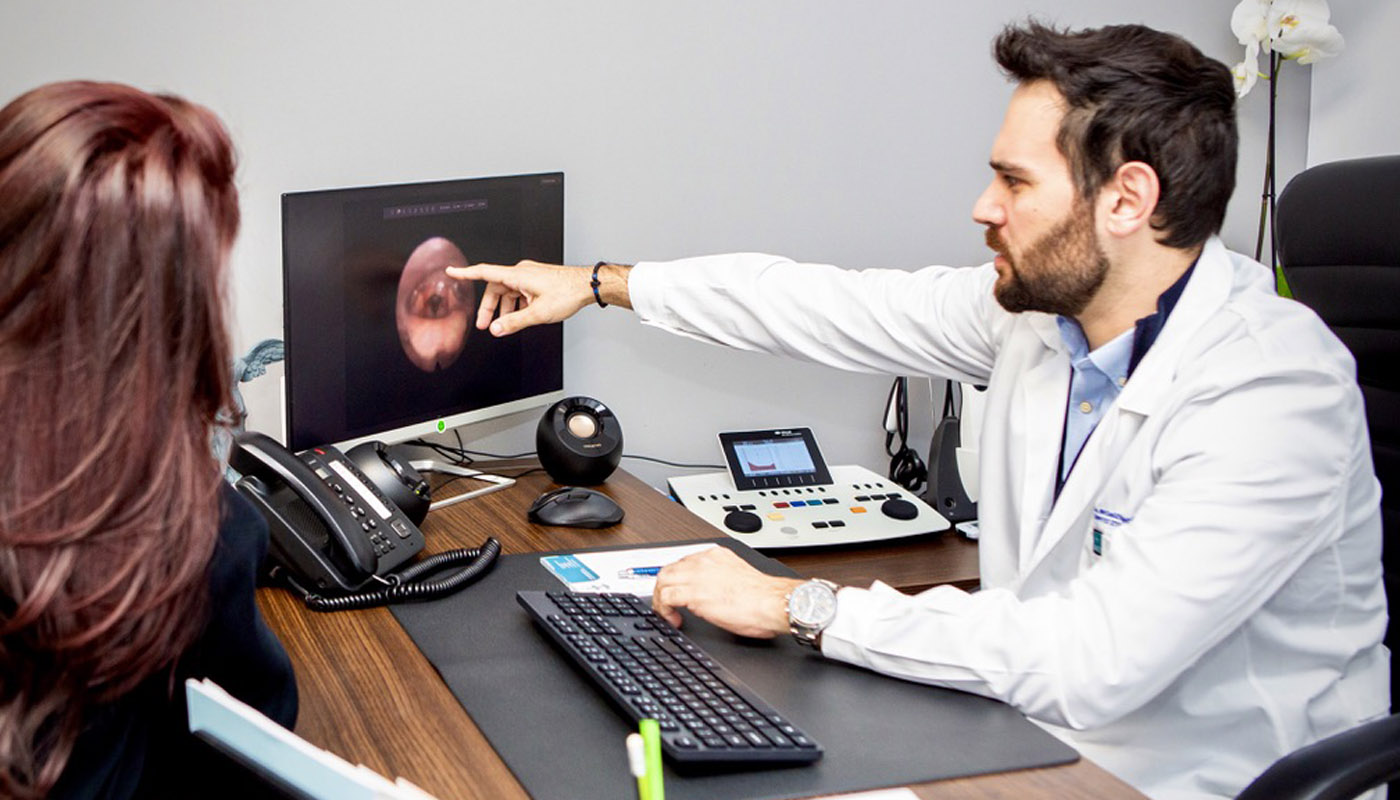
Only a full endoscopic examination by an ENT can give you a clear picture of the septum. Today, this is a very quick and painless procedure.
What is the procedure during surgery?
General anesthesia with the patient’s consent. Using the new endoscopic method with a camera ensures the desired result. Healthy individuals, especially younger ones, do not need hospitalization and can leave three hours after surgery.
Is the procedure painful?
Not at all! It is one of the least painful surgeries when done endoscopically. From the very first day, you will begin to feel the huge benefits.
Will I stop snoring, panting, and feeling tired after the surgery?
Yes. When performed endoscopically, we have the best result. The patient feels incredible well-being and energy in daily life since the burden of the deviated septum is gone.
I’ve heard it doesn’t always succeed. Is that true?
Endoscopic technique offers great accuracy in correction thanks to strong lighting and proper magnification. This makes the procedure immediate, bloodless, and with the desired outcome.
Is there an alternative treatment?
Nasal sprays help somewhat, but the effect is very temporary.
Do many patients swell and bruise after surgery?
That is not true! With the endoscopic method, healthy surrounding tissues are not affected, so patients do not suffer from swelling, bruising, or pain.
When someone has sinusitis, they may present with nasal congestion, runny nose, post-nasal drip, a feeling of heaviness in the forehead (especially when leaning forward), fever, fatigue, and bad breath.
Deviated septum
Enlarged nasal turbinates
Nasal polyps
Upper respiratory infections
Allergic rhinitis
Nasal washes with special solutions, nasal sprays, medication with antibiotics and painkillers. This ensures proper cleaning of the sinuses and immediate relief of symptoms. Total treatment duration is at least 10–15 days.
Also, don’t forget to stay hydrated! Drink plenty of fluids such as tea or chamomile, as they help break down mucus and speed recovery.
If symptoms persist, surgical cleaning of the sinuses is required.
This is the most effective surgery for chronic sinusitis and nasal polyps. With image-guided navigation, surgery can be performed with great accuracy, reaching difficult areas while avoiding complications.
It is a very safe, short-duration surgery. It is painless, and the patient can return to work within a few days.
Tinnitus is the well-known “ringing” in the ears. It usually occurs without an external source of sound and is typically related to an underlying condition. While no definitive cure has been found yet, some types are treatable, and in many cases, symptom relief is possible.
Ringing or buzzing
Continuous tone
High-pitched whistling
Pulsing sound (pulsatile tinnitus)
Earwax build-up
Meniere’s disease
Exposure to loud noise (machines, stereos, firearms, chainsaws)
Stress
Certain medications
Neurological disorders
People with tinnitus often experience irritability, depression, difficulty concentrating.
ENT examination may include ear cleaning, audiological tests, head movement tests, MRI scans, and blood tests.
Treatment begins by addressing causes such as removing earwax, adjusting medications, or treating circulatory issues. While a permanent cure may not exist, symptoms can be reduced.
Accept the condition
Shift attention, don’t obsess over it
Stay active with hobbies and exercise
Manage stress (meditation, relaxation)
Keep a positive mindset
Avoid stressful environments
Diet: reduce caffeine, alcohol, follow a nutrient-rich diet
Quit smoking (it restricts blood flow to the inner ear)
Exercise regularly (walking, jogging, sports)
Calming sounds (soft music, low-volume radio, nature sounds)
Tinnitus can be chronic, but early diagnosis by an experienced ENT can rule out serious causes and greatly improve quality of life. Don’t let it hold you back—you deserve to live fully and enjoy every moment!